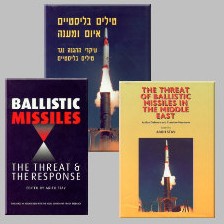
The dangers of WMD are relatively novel, with countermeasures being underdeveloped and often considered fragmentary, without an integrated view of components such as hardening and damage control, active defense, preventive strikes, capacity prevention, deterrence and demotivation. Instead, needed is a systems view which evaluates counter-components in terms of their interactions and aggregate effects. Such a systems view of Zone of Interior (ZI) defenses in turn must be nested within a broader perspective of politico-security grand strategies.
Furthermore, defense systems against WMD must be considered and developed within a systems-interaction view, with potential aggressors sure to adjust themselves to defensive capacities, including building up of clandestine delivery capacities and very lethal biotoxic vectors. This may make BMD quite irrelevant against some potential WMD threats which are stimulated by the very act of building up effective BMD.
Because of lead times, long term horizons are a must, however demanding politically. But, because of rapid change defensive systems can easily be obsolete by the time they are fully operational. Still, there is enough stability in some main features of reality to permit building of a useful ZI defense system, on condition that they are elastic and have a broad range of effectiveness. But large investments in single-threat oriented very expensive components may be a bad choice, unless the stakes are very high.
Because of interaction complexities, long time perspectives and shifting geo-strategic and technological environments, thinking on ZI defenses must cope with much uncertainty and also inconceivability. All decisions on defense against WMD are in essence "fuzzy gambles" and optimal systems too cannot assure full protection.
All the more so, aggressive use of WMP must be morally regarded as an absolute evil, to be prevented and sternly punished. And determined efforts to build up optimal defense systems, including a multiplicity of integrated elements, must be supplemented by "immunization" of population and political elites against irreducible WMD dangers.
Hopefully, a global regime will emerge which eliminates WMD dangers. But this is far off. Therefore, countries facing WMD threats should build up optimal defensive systems. But this requires political and professional capacities which are very scarce. Inter alia, essential are high quality professional staffs near top decision making who consider ZI defense system options with all their complexities within overall national grand strategies. Otherwise, fragmented thinking and choice is unavoidable, resulting in doubtful defenses against WMD.